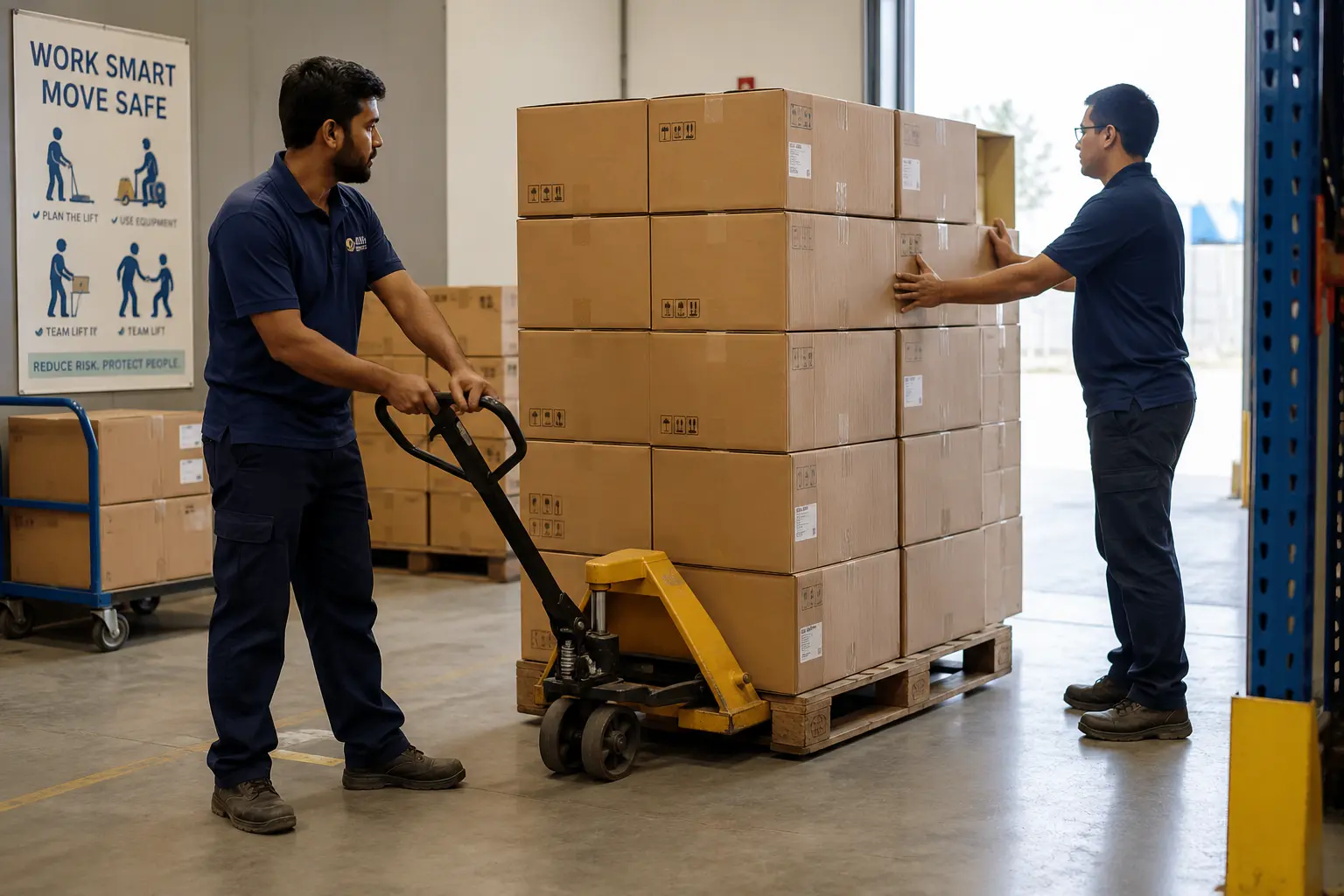
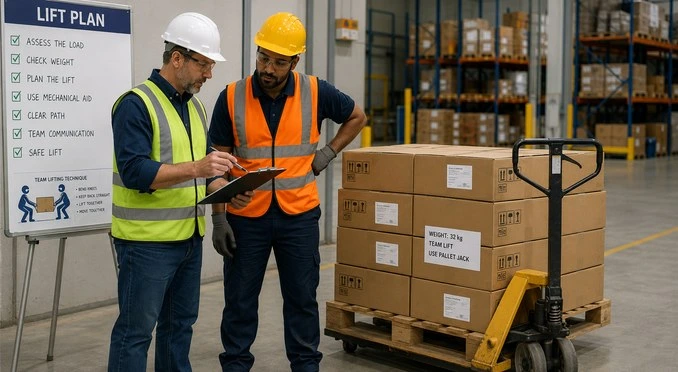
By August, the crew is thin. People are on vacation, shifts are covered by whoever is available, and the ones who are left are carrying more than their share. And somewhere in that stretch, a worker looks at a load that should take two people, decides there is nobody to ask, and lifts it alone.
That is the moment this newsletter is about. Not a dramatic accident. A quiet decision, made under pressure, that a body pays for later.
“A quiet decision, made under pressure, that a body pays for later.”
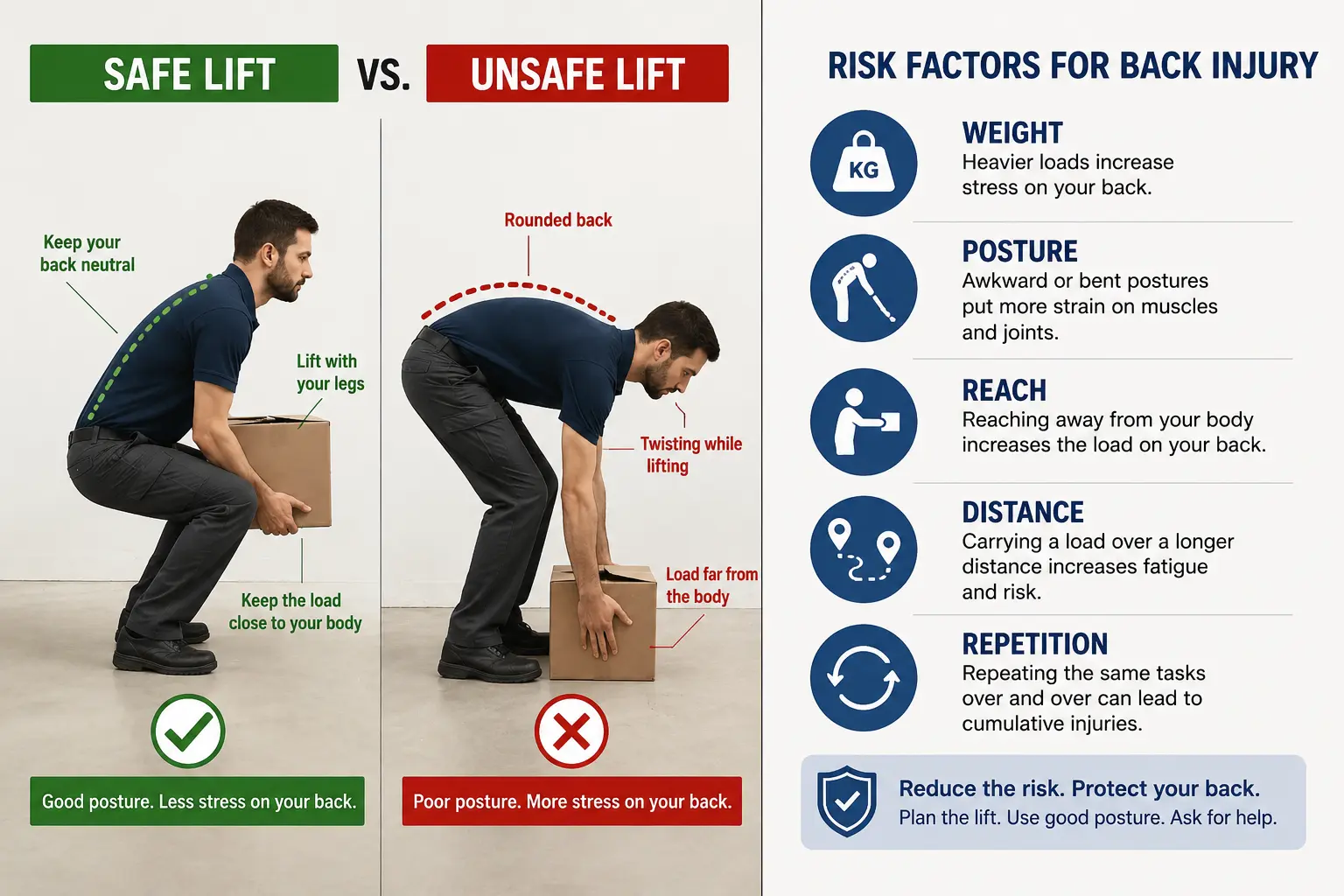
Musculoskeletal injuries, the strains and sprains and back injuries that come from lifting, carrying, pushing, and pulling, are the most common workplace injury in the country. They rarely arrive as a single dramatic event. They build, one awkward lift and one rushed carry at a time, until a worker cannot straighten up. And they climb in the summer, when crews are short and the pressure to just get it done is highest.
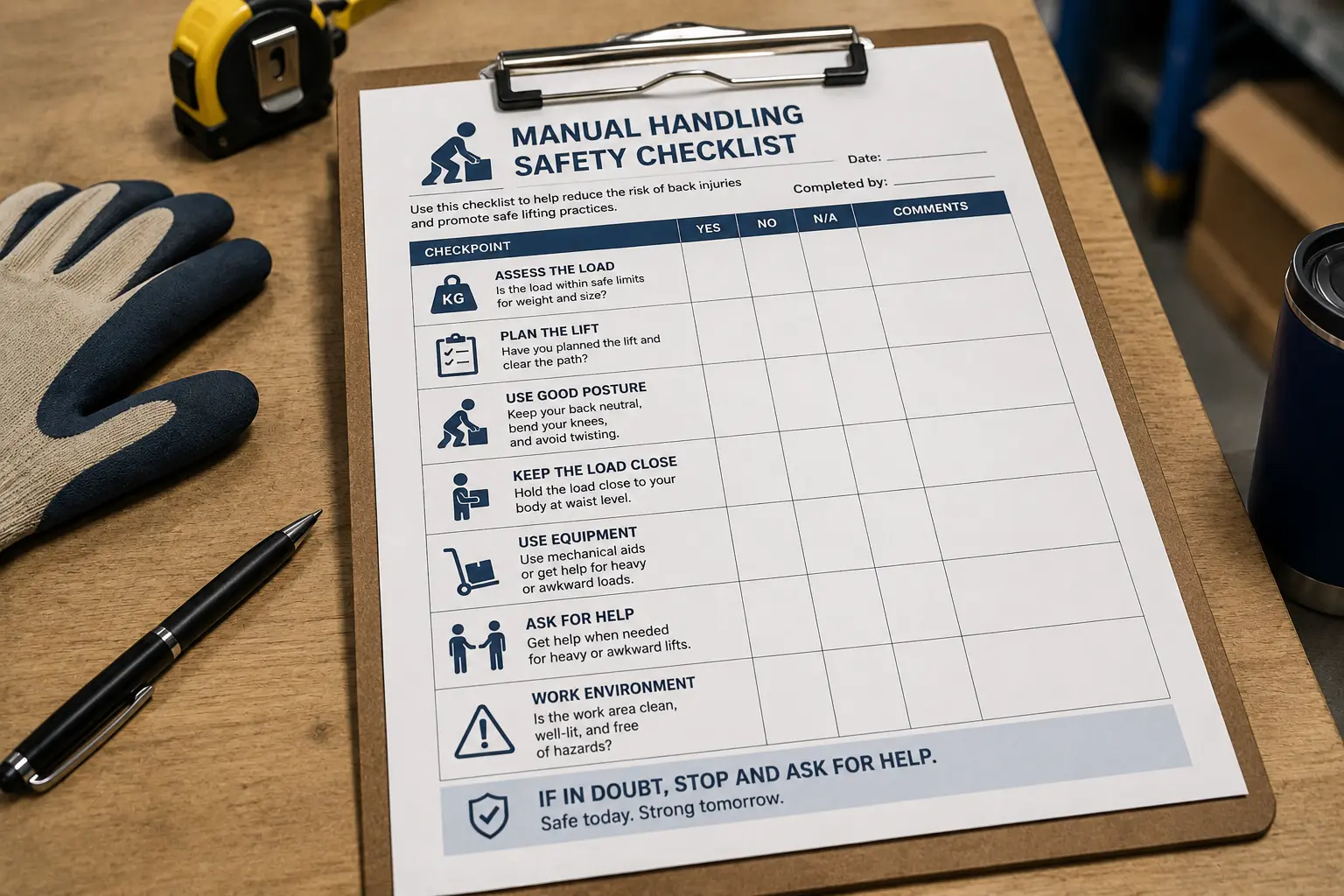
This month we want to talk about three things that belong together: the pressure that makes people take the risk, the slow injury that follows, and the controls that actually prevent it. Read this newsletter. Complete the checklist. File it as a due diligence record. And before your crew works short again this summer, make sure nobody is being set up to move a two-person load on their own.
The Pressure Behind the Injury
Manual handling injuries are not only about weight. They are about the conditions people lift in. A short crew means no second person to call. Vacation coverage means less experienced hands on unfamiliar tasks. Overtime and long days mean fatigue, and a tired worker lifts with worse technique and slower judgment. And the worry people carry from home, the kids, the childcare gaps, the things left unfinished, does not stay at the door. It adds to the fatigue and the distraction that put a back at risk. None of this is an excuse. All of it is a risk factor you can plan for.
Not Just Heavy Lifting
It is easy to picture this as a warehouse or a construction problem. It is not. A cleaner wringing and hauling mops and buckets, a caregiver repositioning a resident, a cook lifting stockpots and cases, an office worker carrying boxes of files, a delivery driver reaching and twisting all day, all of them are doing manual material handling, and all of them are at risk of the same injuries. The question is not whether your people lift heavy things. It is whether anywhere in your workplace someone lifts, carries, pushes, or pulls in a way that could hurt them, especially when they are short-handed, rushed, or tired. If the answer is yes, this newsletter is about you.