Course Overview
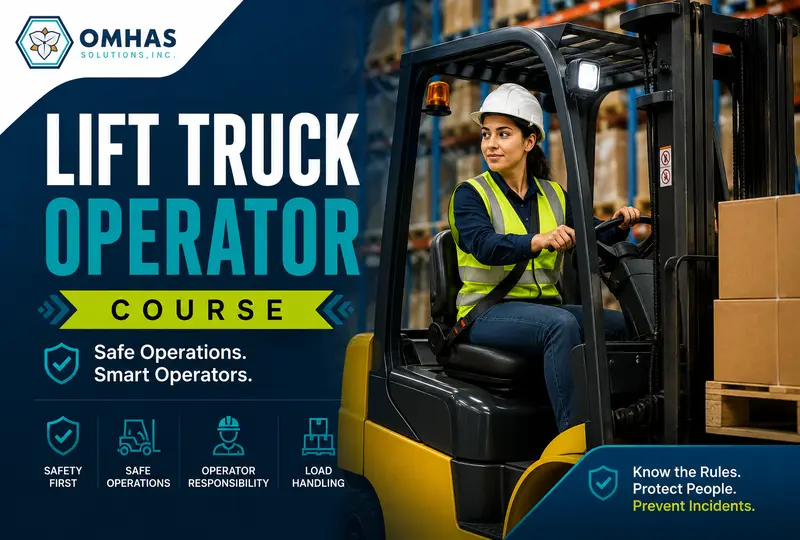
This course teaches the theoretical foundation every powered industrial truck operator must hold before being authorized to operate. It is built for workers and supervisors together, on a single track, so both audiences leave the course with the same understanding of what safe operation looks like and what the law requires. Across thirteen parts, the learner moves through the equipment, the physics, the discipline, and the responsibility of operating lift trucks safely. The course covers counterbalance forklifts, reach trucks, order pickers, pallet trucks (walkie and rider), rough terrain forklifts, and telescopic handlers. It addresses fuel-specific requirements across electric, propane, CNG, diesel, and gasoline equipment. It teaches the pre-shift inspection, the right to refuse unsafe work, stop work authority, the Crush Zone, pedestrian safety, load handling, incident response, and the boundary between theoretical training and the practical evaluation that follows. Your guides through this course. Adam, Senior Safety Advisor. Adam specializes in high-risk work activities, hazard recognition, workplace inspections, job hazard analysis, safe work practices, and incident prevention. His focus is helping workers and supervisors identify risks before work begins and apply practical controls that support safe, effective task execution. Adam’s voice carries the parts of the course that address the law, the physics, the inspection discipline, the right to refuse, and the patterns auditors look for when something has gone wrong. Sayuri, Warehouse and Material Handling Advisor. Sayuri specializes in warehouse operations, material handling, lift truck safety, pedestrian awareness, storage systems, and workplace traffic management. Her focus is helping organizations improve safety, efficiency, and operational consistency throughout receiving, storage, inventory movement, and shipping activities. Sayuri’s voice carries the parts of the course that address safe operation, load handling, the Crush Zone, pedestrian safety, and the equipment-specific operating differences across truck types. Together, Adam and Sayuri walk the learner through the course with calm, clarity, and respect for the work. Built to stand up to scrutiny. The course is built on OHS-PROG-20, the Forklift and Powered Industrial Trucks program. It is aligned with COR/SECOR 2020 audit requirements, ready for Avetta and ISNetworld contractor prequalification platforms, and built to support WSIB Health and Safety Excellence Program validation. The course is province-neutral throughout the body. Province-specific requirements are addressed through the Legal and Regulatory Framework appendix of OHS-PROG-01, where each Canadian jurisdiction’s requirements live. What the learner receives. Successful completion earns the OMHAS Academy Certificate of Completion in Lift Truck Operator (Theoretical) training. The certificate represents that the theoretical training has been completed and the final quiz passed at eighty percent or higher. Authorization to operate equipment requires the practical evaluation that follows, conducted by a qualified evaluator under OHS-PROG-20 Appendix B Section 2, and written authorization from the employer. Common sense protects life. The law protects everyone else’s.