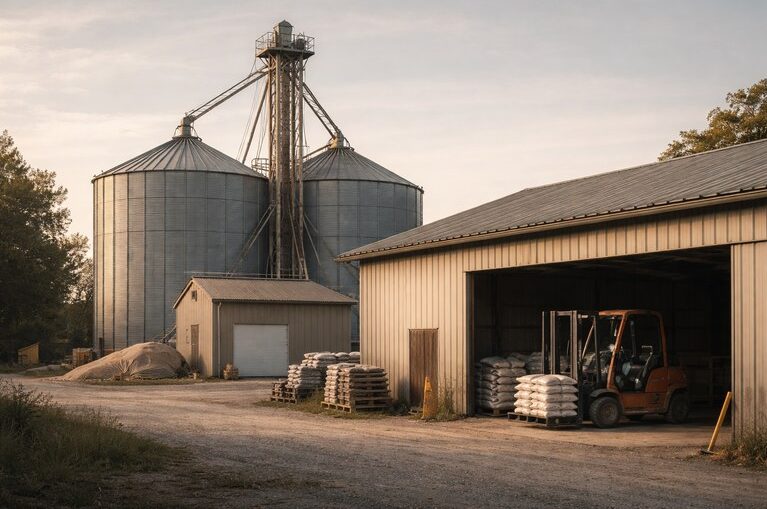
Across Canada, something shifts in May. Yards come alive. Equipment that sat silent through the winter gets powered back up. Seasonal workers return. Students finish school and step into workplaces for the first time.
And this is exactly when people get hurt.
Not because anyone meant for it to happen, but because the startup moment is the moment of maximum risk. Equipment has not been inspected. Procedures have not been reviewed. Workers who have been away for months are operating on memory instead of training.
“The startup moment is the moment of maximum risk.”
A Moment to Remember, April 28
This month, we want to talk about three things: pre-season inspection and maintenance, safe operating procedure review and retraining, and vulnerable workers. Because May brings all three together at once, and the window to get it right is narrow.
Read this newsletter. Post the checklist. File it as a due diligence record. And if you are not sure whether your workplace is ready for the season, this is the month to find out.
What Is a Vulnerable Worker?
A vulnerable worker is any worker who faces a heightened risk of injury due to limited experience, limited language proficiency, or limited familiarity with the hazards of their workplace. Three groups are especially present in Canadian workplaces in May.
Young workers (generally under 25) entering or returning to the workforce for the spring and summer season. Many have never operated powered equipment before.
Workers with limited language proficiency. A worker who cannot fully read a safe operating procedure is at measurably greater risk. This is a reality every employer has a duty to address.
New and returning workers in their first weeks on a job or back after an extended absence. A worker who was here last season is not automatically ready for this season.
If any of these workers are in your workplace right now, this newsletter is especially for you.
Legal Update: Three Real Cases
Your Legal Duty Does Not Take a Winter Break
Three cases. Three warnings. One message.
Employers have a legal duty, under occupational health and safety legislation across every province and territory in Canada, to take every reasonable precaution for the protection of workers. This duty does not diminish in spring. It intensifies.
When equipment comes out of winter storage, employers are responsible for ensuring it is safe to operate before any worker uses it. When workers return after an extended absence, employers are responsible for ensuring they are retrained on current procedures before they resume their duties.
These are not suggestions. They are legal obligations. And when something goes wrong in a workplace that skipped the startup inspection, the employer, the supervisor, and sometimes the worker all bear legal consequences.
Case One · Aylmer, Ontario · March 2023
Ryan Laarman was 18 years old. He was a Grade 12 student who had worked part-time at Elgin Feeds Country Store in Aylmer for three years. On the morning of March 15, 2023, he was working in the area of a grain elevator feed when he lost his footing and fell into the shaft below. He was transported to St. Thomas Elgin General Hospital, where he later died from his injuries.
Ryan had three years of experience. He was not a stranger to the workplace. But experience alone does not replace a pre-operational check that confirms the auger is shut down before any access point is opened. A federal investigation was launched. It remains ongoing.
Ryan was 18 years old. He would have graduated in June.
“Experience alone does not replace a written safe operating procedure.”
Case Two · Lacombe County, Alberta · June 2023 · Convicted September 2025
A worker at a farm equipment dealership unhitched an air seeder tank from a tractor on the side of a highway. The tank rolled back. The worker was seriously injured while attempting to stop it.
George’s Farm Centre Ltd. pleaded guilty and was ordered to pay $108,000. There was no safe work procedure in place that controlled the sequence of steps for unhitching agricultural equipment on an uneven surface.
The equipment moved. The worker was in the way. The employer paid $108,000. The worker paid with their body.
Case Three · Regina, Saskatchewan · September 2021 · Convicted October 2025
A worker at an industrial facility in Regina was seriously injured while operating a forklift. Brandt Industries Canada Ltd. was found guilty of failing to ensure that only trained operators were permitted to operate powered mobile equipment. The company was fined $55,000.
Can you confirm, right now, that every operator of powered mobile equipment on your site has current, documented training for that specific piece of equipment? If you cannot answer yes with a record to support it, you have work to do before that equipment moves.
Due Diligence Record: File This
Spring Startup Checklist: Before the First Shift
Complete this checklist before any equipment operates this season. Sign it. Date it. File it. It is your due diligence record.
Experience alone does not protect a worker. A written procedure and a pre-operational check do. Use this checklist before the first shift of the season, every season, without exception.
Section A: Pre-Season Equipment Inspection and Maintenance
Section B: Safe Operating Procedures and Retraining
Section C: Vulnerable Worker Readiness
This checklist is a due diligence record.
Workers who know their jobs still need written procedures, pre-operational checks, and supervisors who verify that every step is followed before equipment is engaged. Those things cost nothing compared to what their absence costs. Download the print version below to complete, sign, and file.
Action Plan: Five Steps Before End of May
What You Can Do Before the End of May
Spring startup is a process. Document it. It is your legal protection.
Spring startup is not a single day. It is a process. And it is a process that must be documented if it is going to protect you legally as well as physically.
- Walk your yard and facility right now. Look at every piece of equipment unused since fall. Ask honestly whether it has been inspected, whether its guards are intact, and whether anyone has verified it is safe to operate. If the answer is no, it does not operate until it is.
- Pull out your safe operating procedures. Read them. If they are more than one year old, review them for accuracy. If they do not exist for a piece of equipment or task, write them before that task is performed. If you need help writing them, call us.
- Sit down with every returning worker before their first shift. Treat that conversation like an orientation. Ask them to walk you through the procedure. Do not assume they remember. Confirm that they do.
- Identify your vulnerable workers. Young workers. Workers with limited English. Workers who are new to this site or new to this season. Give them more supervision, not less. The law requires it.
- Complete the checklist above. Sign it. Date it. File it. If an inspector ever visits, or if an incident ever occurs, that signed checklist is evidence that you took your startup responsibilities seriously.
Ryan Laarman would have graduated in June 2023. He was a bright light, his employer said. A beaming personality. A young man who loved music, art, basketball, and hunting. He went to work one morning and did not come home.
May is the month to make sure that does not happen in your workplace. Walk the yard. Check the equipment. Review the procedures. Train the crew. And make sure every single person who shows up on your site this spring, whether they are eighteen or sixty, whether it is their first season or their twentieth, goes home at the end of the day.
That is what this work is for.
In safety and accountability,
OMHAS Solutions Inc.