Everything Changes, Before the Worker Does
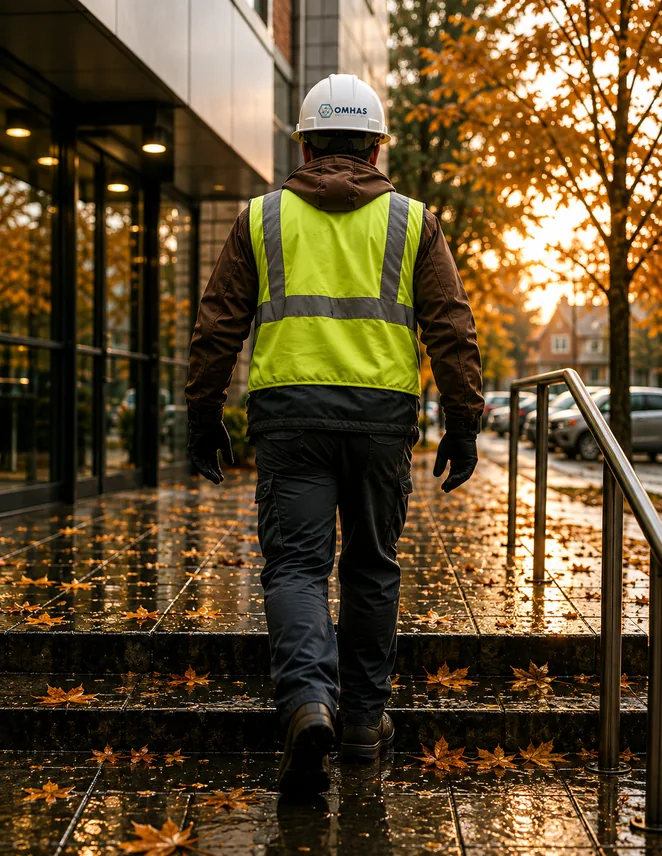
Workers do not suddenly become careless in the fall. The workplace changes around them. The weather turns, and surfaces that were dry all summer are wet with rain, slick with leaves, and glazed by the first frost. The light changes, and the walk to the car that happened in daylight in August happens in the dark by late September. The pace changes, because everyone can feel winter coming, and the rush to finish the outdoor work, the repairs, and the deadlines before the snow flies is on. And the routine changes: summer ends, school starts, and mornings and evenings tighten around bus times, pickups, and practices.
Everything changes, before the worker does. That is what makes September dangerous. The person is the same. The ground is not.
Everything changes, before the worker does.
What changes in September
Falls are the result. The serious fall from a ladder or a roof, rushed because winter is coming. And the ordinary fall on the same level, the slip on a wet floor or an icy step that every one of us has nearly taken. Both climb in the fall. Both are preventable. And both come down to the same thing: preparing the workplace for the season before the season changes it for you.
Not Just Roofs and Ladders
It is easy to read a piece about falls and think it is meant for roofers and construction crews. It is not. Every workplace has a set of stairs, an entrance where the weather gets tracked in, a loading dock, a ramp, a cord run across a floor, and a parking lot that is dark and icy by October. Same-level falls, the slips and trips on the ground people cross every day, are among the most common injuries in any workplace, in any industry. The question is not whether your people climb. It is whether anywhere in your workplace the footing, the light, or the housekeeping gets worse when the season turns. If the answer is yes, this newsletter is about you.
The Fall Everyone Has Nearly Taken
The most common fall is the one on level ground
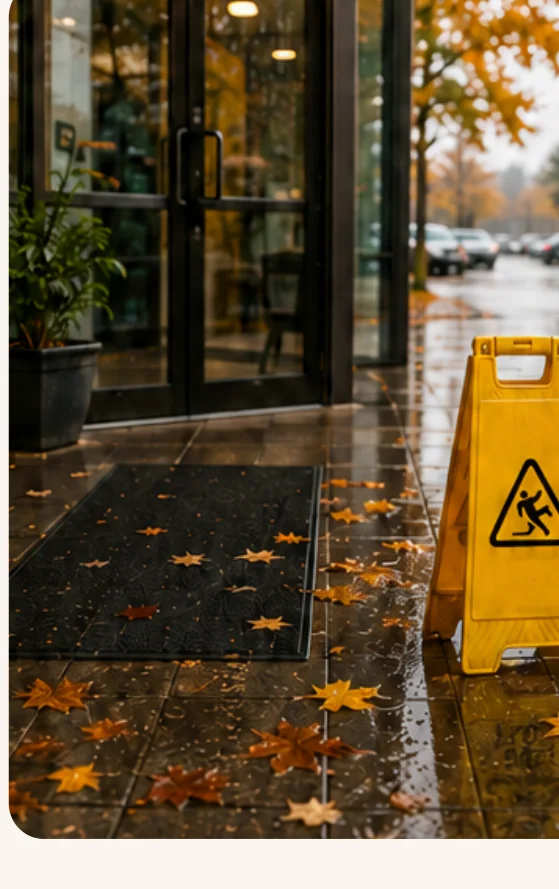
Everyone has nearly taken it. The foot that slides on a wet tile at the entrance, the heel that catches the edge of a mat, the step off a curb onto a patch of ice that was not there yesterday. Same-level falls do not look dangerous. That is exactly why they are the most common cause of lost-time injury in workplace after workplace, and why they are so easy to ignore until someone breaks a wrist, a hip, or worse.
In September and the weeks after, the odds get worse. Rain and wet leaves coat outdoor walkways. Morning dew and the first frost glaze steps and ramps before anyone has salted them. Weather gets tracked in through doorways, leaving floors slick right where people enter at speed. And the light drops, so the hazard is harder to see at the ends of shifts. None of it requires a worker to do anything wrong. The ground simply changes under them.
The footing gets worse before anyone notices
None of these is dramatic. Every one of them is a fall waiting for the weather. And it arrives at the busiest time of the year, when the outdoor work, the repairs, the shutdowns, the shipping, and the end-of-quarter push all speed up at once. Urgency is the quiet driver of falls.
None of it requires a worker to do anything wrong. The ground simply changes under them.
What the Law Requires
The law does not treat a slippery floor as bad luck. Under the general duty in every provincial OHS Act, the employer has a duty to take every reasonable precaution to protect workers from a foreseeable hazard, and a walkway that ices over every autumn is entirely foreseeable. The rules go further for the surfaces people walk on: exterior stairs, walkways, and ramps must be kept free of ice, snow, and other slipping and tripping hazards, and workplaces must be kept clean and clear so people are not hurt on the ground they cross to do their jobs.
General duty
Every Canadian OHS statute requires the employer to take every reasonable precaution to protect workers from foreseeable hazards. In Ontario that is the Occupational Health and Safety Act, section 25(2)(h).
Falls from height
Ontario’s Construction Projects Regulation, O. Reg. 213/91, requires fall protection where a worker may fall three metres or more, and Working at Heights training under O. Reg. 297/13. British Columbia’s Occupational Health and Safety Regulation requires fall protection at three metres, or at any height where a fall could cause serious injury. Alberta’s OHS Code requires the same at three metres.
Slips and trips
Federally, the Canada Occupational Health and Safety Regulations require exterior stairways, walkways, and ramps to be kept free of ice, snow, and other slipping and tripping hazards, and every province carries the same duty to keep walking surfaces safe.
National best practice
The CSA Z259 series of fall-protection standards, and the resources of the Canadian Centre for Occupational Health and Safety.
The Fall Everyone Fears
The fall from a ladder or a roof, rushed because winter is coming
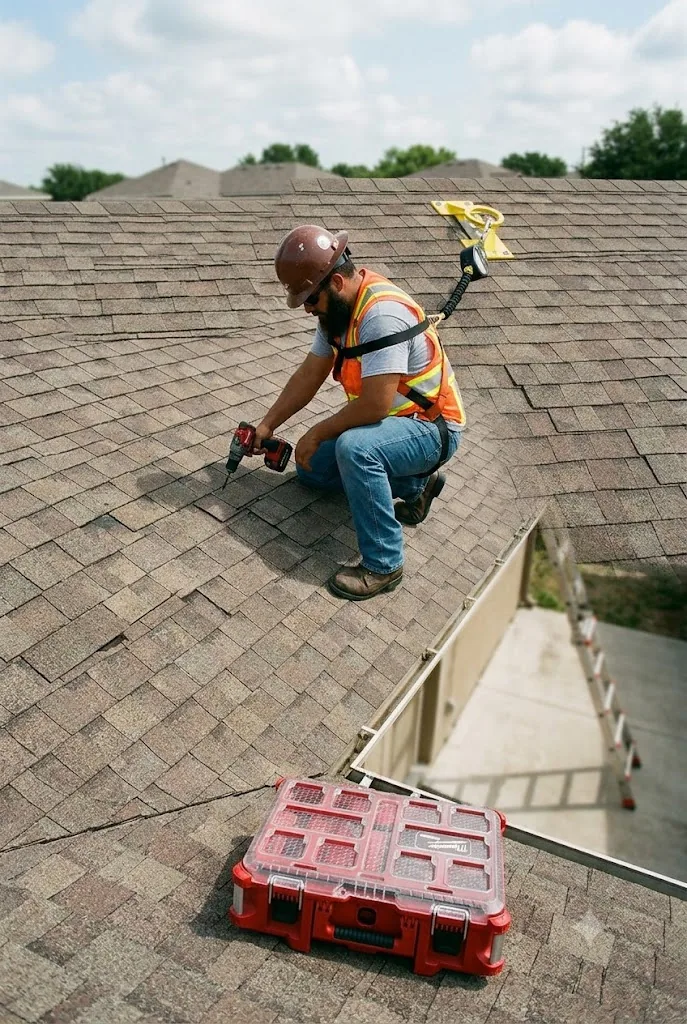
The other fall is the one everyone pictures when they hear the word: the fall from a ladder, a roof, a scaffold, a loading dock. It is far less common than the slip on the level, but when it happens, it is far more likely to be fatal. And the autumn rush is written all over these cases. The outdoor job has to be finished before the snow, the light is short, the weather is closing in, and the fall protection that would have saved a life is sitting in the truck, unused, because putting it on would have taken a few more minutes.
That last detail is the one that repeats. In case after case, the equipment was there. The training was required. The rule was known. And under the pressure to get the roof done before the weather turned, someone climbed without it.
A fall from height is usually not a missing guardrail. It is a guardrail that was there and skipped.
Show Me The Fines
Three cases. Three provinces. The protection was there.
A worker on a home renovation was helping install windows and siding. Standing on a veranda roof about three and a half metres up, they climbed a ladder toward the main roof to hand their supervisor a tool, fell backward, and died. The worker had never completed the mandatory Working at Heights training, and neither the worker nor the supervisor was wearing fall protection, though the equipment was sitting in the company truck onsite. The company was fined $80,000. A ladder, a tool, and a few metres, and the two things that would have changed the outcome, the training and the harness, were both available and both skipped.
A worker was installing strapping across the roof trusses of a barn under construction, about thirty feet above the ground, when they fell through the framing and died. The worker was not using any fall protection, even though the equipment was available on the site. The company had not assigned a supervisor and had held no formal safety talks, and although it had a written policy, it had put no fall protection procedures in place. The company was fined $60,000. The gap between having a policy and using one is exactly where this worker fell.
Serious injury, convicted 2025
A worker set an unsecured portable ladder next to an uncovered opening in the floor. The ladder slipped and toppled, and the worker fell through the opening into the basement below, suffering serious, life-altering injuries. Two basic controls were missing at once: the ladder was not secured, and the opening was not covered. The employer was fined $168,000 for failing to protect the worker, and the site’s prime contractor a further $168,000 for having no system in place to catch either failure.
This is not rare, and regulators are watching
September Readiness Checklist
Due diligence record: walk it, sign it, file it
Walk your site before the weather turns. Sign it. Date it. File it.
Section A: the ground underfoot
Section B: working at height
Section C: preparing for the season
Your September Action Plan
Walk the site before the season turns it against you
Walk your whole site, inside and out
Look at it as autumn will leave it. The entrance where rain gets tracked in, the steps and ramps that will ice over, the dark corner of the parking lot, the ladder someone will grab to clear a gutter. Mark the hazards the season is about to create.
Fix the footing before the weather does
Set a clearing and salting schedule now, put mats at the weather doors, clear the drains, and check every light on a walkway or stairway before the dark months arrive.
Deal with the height work before the rush
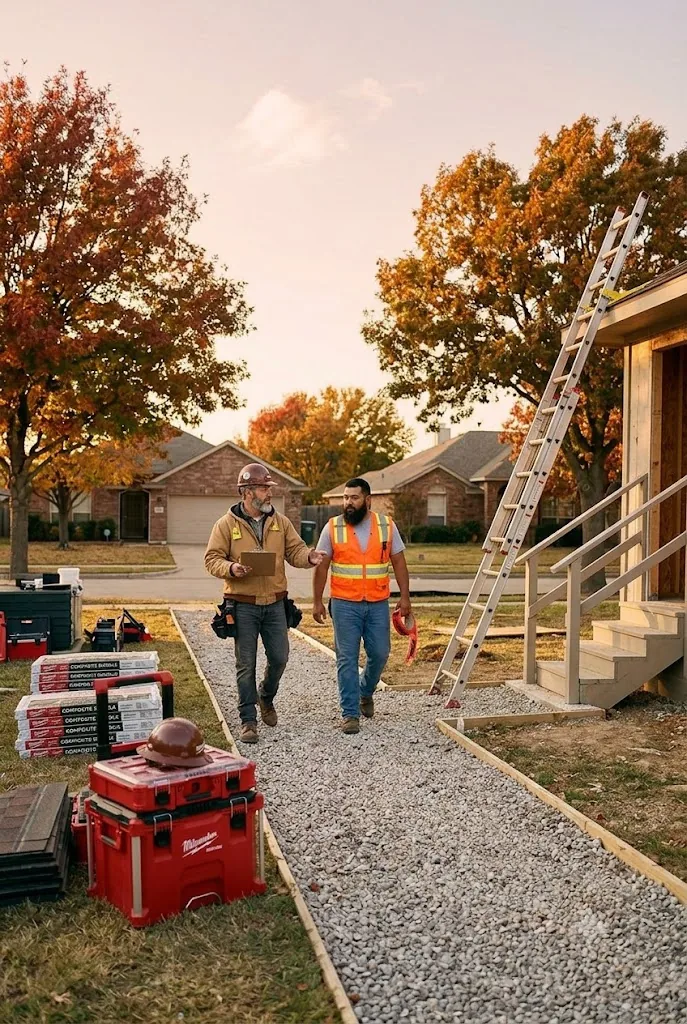
Inventory and inspect the ladders and the fall protection, confirm the people doing roof, gutter, and dock work are trained, and make using the protection the rule, not the thing that gets skipped to save ten minutes.
Manage the deadline, not just the work
The push to beat winter is real, but a rushed crew is a falling crew. Build the time in, and make clear that finishing safely beats finishing fast.
Remember the roads changed too
If your people drive or run a fleet, school is back in. Remind them that school zones are active again, that buses stop with their lights out, and that children appear at crossings, on the same darker morning and evening drives.
Falls are almost never a single reckless act. They are the season changing faster than the workplace did. The frost arrives before the salt does. The dark arrives before the lights are checked. The deadline arrives before the ladder is inspected. Each gap is small. Together, over a few autumn weeks, they are how an ordinary walk across a yard or a climb up a ladder becomes the day someone does not go home whole.
The calendar is one of the few hazards that always gives you notice. You already know the weather will turn. You already know the days will shorten. You already know the rush to finish before winter is coming. Few hazards announce themselves so honestly, which means every one of these falls can be prepared for, on a dry, bright day in September, before the season forces the issue. The safest workplaces do not react to autumn. They prepare for it before autumn arrives.
Before you put this newsletter down, answer one question. Somewhere in your workplace, is there a surface, a stairway, an entrance, a ladder, or a stretch of ground that gets more dangerous the moment the weather turns, and has nothing yet been done about it?
If you are not certain, that uncertainty is your answer. Go and walk it. Complete the checklist. Sign it. Date it. File it. That walk, documented, is what keeps your people upright and your business protected.